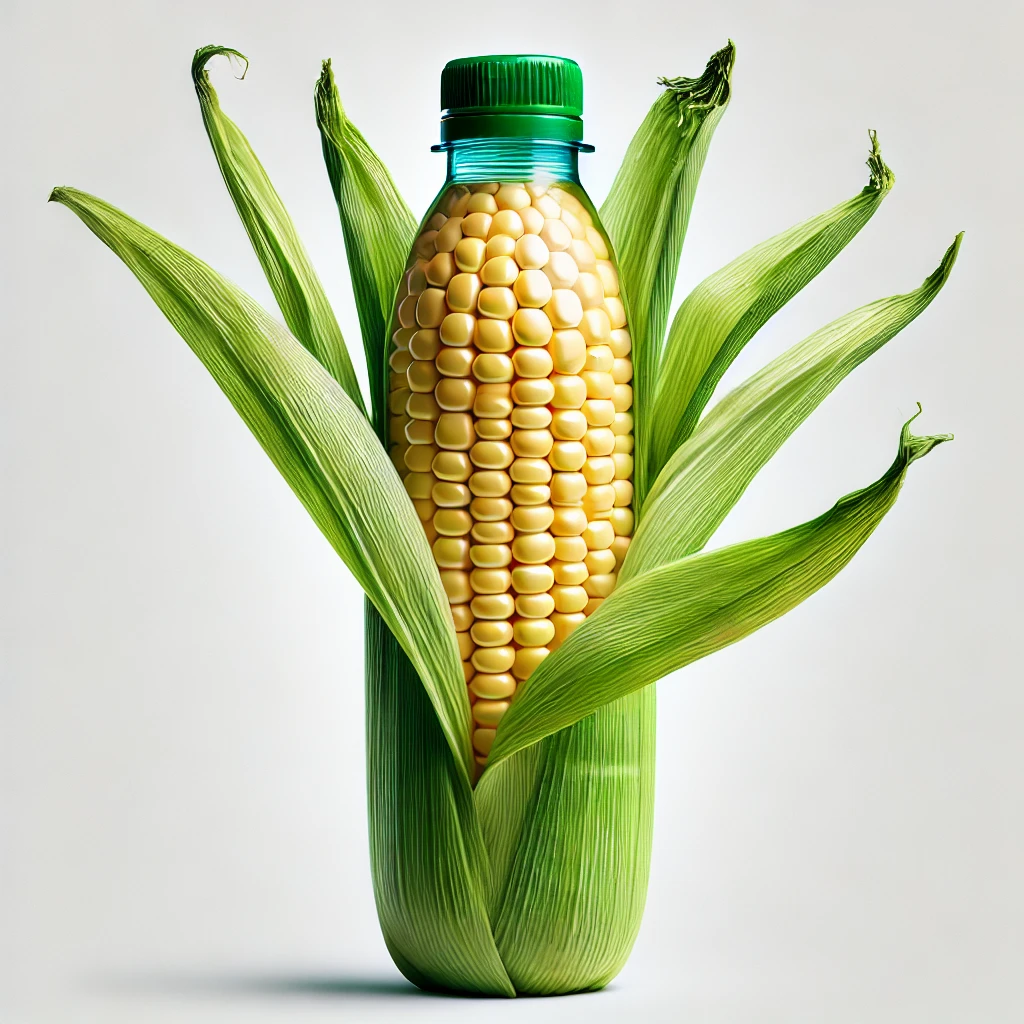
Bio-based plastics are made in whole or in part from biologically derived raw materials rather than fossil fuels.
They can be made from primary feedstocks, such as maize and rapeseed, or secondary feedstocks, such as agricultural waste and cooking oils [1]. Those developed in the POLYMEER Project will be based on brewers’ spent grain (BSG), making them second-generation bioplastics.
Bio-based plastics are sometimes equated with biodegradability, but not all are biodegradable (see Figure 1). Biodegradable plastics are those that can be broken down by naturally occurring microorganisms into carbon dioxide, microbial biomass and mineral salts [1].
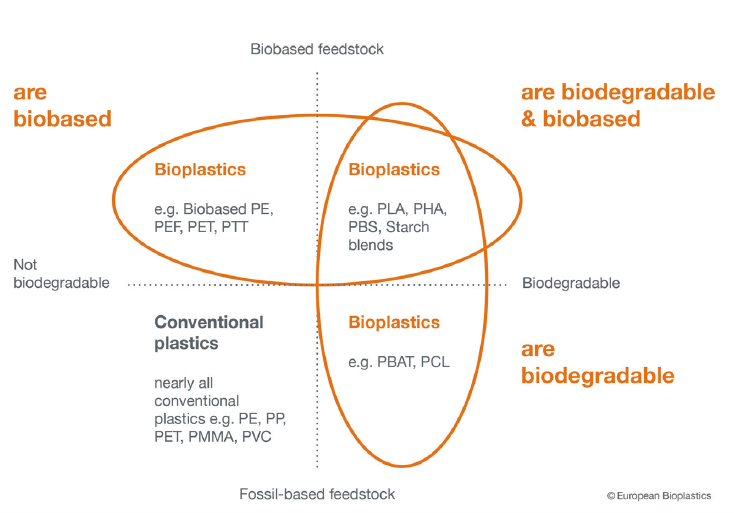
These plastics are either industrially compostable or environmentally biodegradable. The latter are “fully biodegraded by microorganisms in specific environments, like agricultural soil or freshwater” [1]. Compostable plastics are decomposed in industrial facilities and, according to European Union standard EN 13432, must meet specific conditions in order to be labelled as certified industrially compostable, including a minimum of 90% biodegradation within six months [3]. Agricultural mulch films produced under POLYMEER will be environmentally biodegradable in situ and might also be industrially compostable.
In 2024, the global production of bio-based plastics was estimated at 2.47 million tonnes, of which biodegradable plastics accounted for 56% [4], and is projected to increase to around 6.3 million tonnes in 2027 [5]. European production accounts for just over a quarter of total production and over 43% of revenue share, with an annual growth rate of 10% compared to the global rate of 4% [6]. Although bioplastics account for only 1% of the total plastics production in Europe, bio-based raw materials are steadily increasing [7]. Furthermore, the bio-based plastics industry is currently producing at almost 60% of capacity and has significant growth potential [4].
Despite the projected increase, bioplastics production will not compete with land used for food and feed production, which currently accounts for 25% of arable land, while bioplastics land use was 0.015% in 2022, rising to 0.058% in 2027 [2].
Packaging is the largest market for bioplastics, accounting for 48% of global production, followed by fibres (15%), while agriculture and horticulture account for 4% [6]. In 2022, 39% of plastics in Europe were used in packaging and 4% in agriculture and farming [8]. In the report, textile fibres are classified as ‘others’, accounting for 16% of the total [9].
The most common type of bioplastics in flexible packaging, which is used in tertiary packaging, is polylactic acid (PLA), followed by polyethylene (PE), starch blends and polybutylene adipate terephthalate (PBAT) [10] (Figure 2), which are similar to the types of bio-based plastics that POLYMEER will develop and/or use as blends. PBAT, PLA and starch blends are all biodegradable [10].
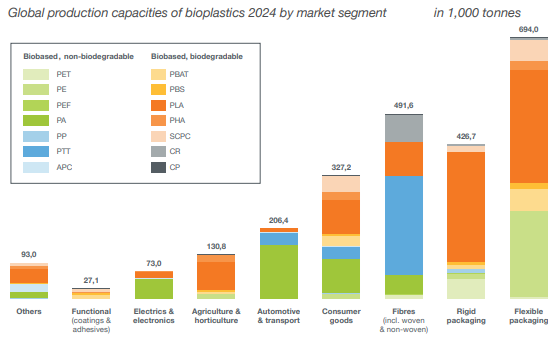
Only 24% of agricultural plastics are currently recycled, so if they are not completely removed or properly disposed of, they can be dispersed by the wind or drainage or release microplastics [11]. Soil-biodegradable mulch films, one of POLYMEER’s target applications, are a better and more sustainable alternative. Most bioplastics used in agriculture and horticulture are PLA polymers, followed by polyhydroxyalkanoates (PHAs) [4]. Both can be combined with the renewable lactone-based polyesters that POLYMEER will produce.
The automotive industry dominates the hybrid textile market with a market share of 34.4% and is one of the main consumers of technical textiles, which make up over 85% of a car’s interior [12]. The most common material is bio-polyester (44%), followed by PLA (22%) [12]. However, the mechanical and thermal properties of the latter limit their use in several fields. For this reason, POLYMEER plans to develop lactone-based polymers or bio-polybutylene succinate (PBS) compounds with improved properties.
References
| [1] | Plastics Europe, “Bio-based and biodegradable plastics,” 2024. [Online]. Available: https://plasticseurope.org/sustainability/climate/circular-feedstocks/bio-based-and-biodegradable-plastics. [Accessed 23 December 2024]. |
| [2] | European Bioplastics, “EU Policy Framework on biobased, biodegradable and compostable plastics,” 2023. https://www.european-bioplastics.org/eu-policy-framework-on-biobased-biodegradable-and-compostable-plastics. |
| [3] | Royal Society of Chemistry, «Compostable and biodegradable plastics,» 2024. https://www.rsc.org/globalassets/22-new-perspectives/sustainability/progressive-plastics/explainers/rsc-explainer-2—compostable-and-biodegradable-plastics.pdf. |
| [4] | European Bioplastics, “Bioplastics market development update,” 2024. https://www.european-bioplastics.org/bioplastics-market-development-update-2024. |
| [5] | Packaging Europe, “European Bioplastics forecasts increased production of bioplastics by 2027,” 6 December 2022. https://packagingeurope.com/news/european-bioplastics-forecasts-increased-production-of-bioplastics-by-2027/9167.article. |
| [6] | Commonwealth Scientific and Industrial Research Organisation, “State of bioplastics in Australia,” 2024. https://research.csiro.au/ending-plastic-waste/bioplastics-report. |
| [7] | Plastics Europe, “The Circular Economy for Plastics – A European Analysis 2024,” 2024. https://plasticseurope.org/knowledge-hub/the-circular-economy-for-plastics-a-european-analysis-2024. |
| [8] | World Bio Market Insights, “EU bioplastics policy: progress and prospects,” 5 July 2023. https://worldbiomarketinsights.com/eu-bioplastics-policy-progress-and-prospects. |
| [9] | Plastics Europe, “Plastics – the fast Facts 2023,” 2023. https://plasticseurope.org/knowledge-hub/plastics-the-fast-facts-2023. |
| [10] | European Bioplastics, “Bioplastics packaging – combining performance with sustainability,” 2023. https://www.european-bioplastics.org/bioplastics-packaging-combining-performance-with-sustainability. |
| [11] | European Commission, EU policy framework on biobased, biodegradable and compostable plastics. COM(2022) 682 final, 2022. https://environment.ec.europa.eu/system/files/2022-12/COM_2022_682_1_EN_ACT_part1_v4.pdf. |
| [12] | Global Market Insights, “Hybrid Textile Market – By Form, By Fiber Type, By End Use & Forecast, 2024 – 2032,” 2024. https://www.gminsights.com/industry-analysis/hybrid-textile-market. |