The environmental crisis caused by plastic pollution continues to escalate, emphasising the urgent need for innovative and sustainable alternatives. A recent scientific review highlights the potential of agricultural and food waste as a viable source for bioplastic production. This aligns directly with the mission of POLYMEER, dedicated to developing a new bio-based value chain for bioplastic products derived from brewers’ spent grain (BSG). By leveraging agricultural by-products, POLYMEER and similar initiatives support the transition towards sustainable bioplastics that address the limitations of conventional fossil-based plastics.
Agricultural waste as a valuable resource for bioplastic production
The article Can agriculture and food waste be a solution to reduce environmental impact of plastic pollution? Zero-waste approach for sustainable clean environment, published on the Bioresource Technology journal, provides a review of how food waste and agricultural by-products can serve as key resources in bioplastic production. The study underscores the abundance of polysaccharides and cellulose in agricultural residues, such as banana peels, avocado seeds, and durian seeds, which can be effectively converted into bioplastics. By adopting a zero-waste approach, these materials not only reduce plastic pollution but also enhance the economic value of agricultural waste.
According to the study, starch is a primary biopolymer in food waste that can be utilised to produce biodegradable plastics. Starch-based bioplastics are gaining traction due to their biodegradability and cost effectiveness, offering a promising alternative to petroleum-based plastics. However, optimising their properties, such as tensile strength and flexibility, remains a critical area of research.
Circular economy development with BSG-derived bioplastics
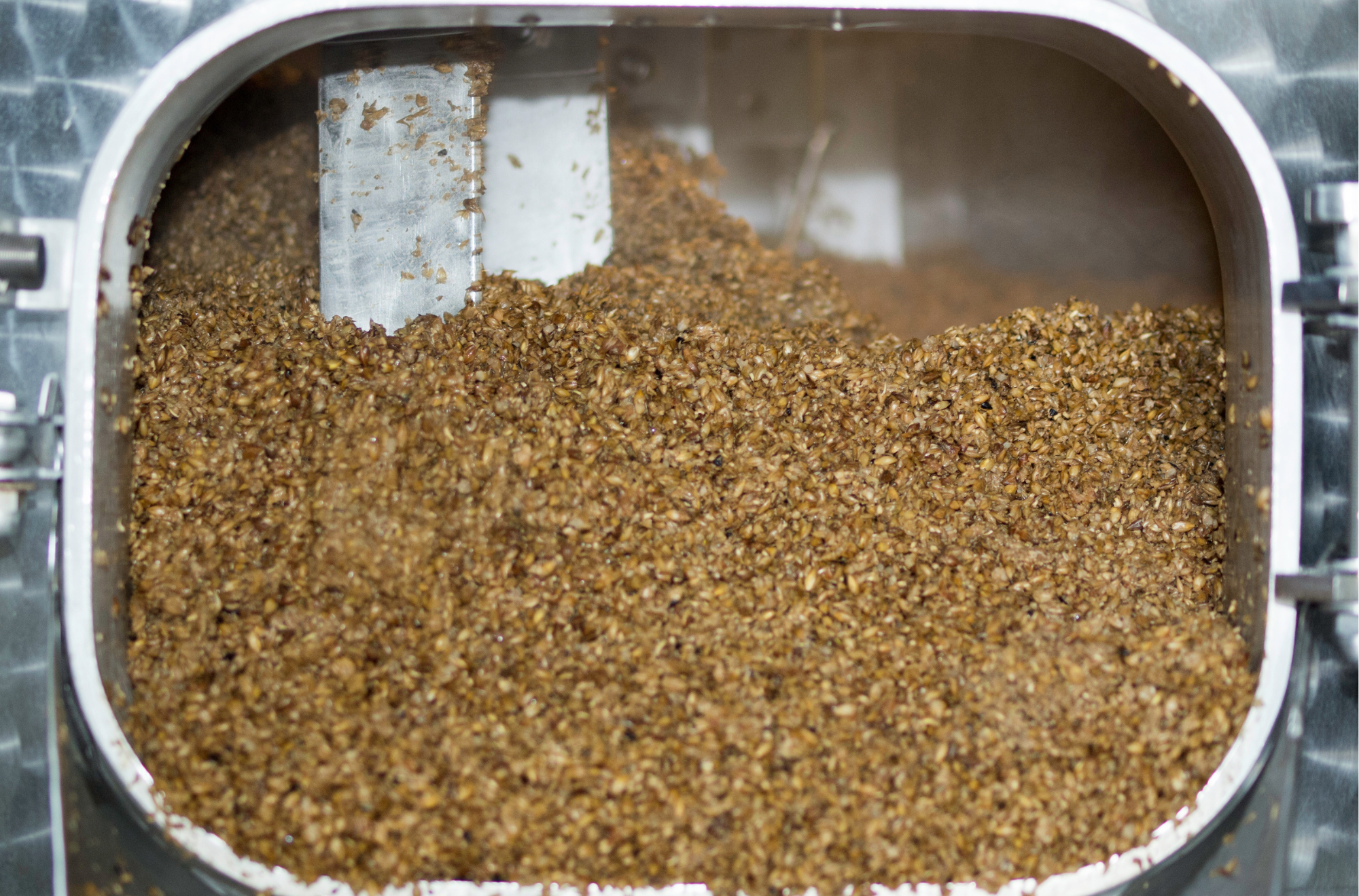
POLYMEER shares a common vision with the findings of the research article: transforming agricultural waste into high-value bioplastics. The project specifically focuses on the effective exploitation of brewers’ spent grain (BSG), a by-product of the brewing industry, to develop sustainable plastic alternatives. BSG contains valuable biopolymers like cellulose, hemicellulose, and lignin, which can be converted into specialised polymers and copolymers. Through a combination of green processing technologies, formulation, and advanced material design, POLYMEER aims to create bioplastics that meet the performance demands of three crucial application areas.
The first application is biodegradable mulch films for agriculture that improve soil health and reduce plastic contamination in farmlands. Also, textiles for the automotive industry that prove to be sustainable and durable for vehicle interiors and components. Finally, tertiary packaging films designed for recyclability and biodegradability in controlled environments.
Key research insights and their relevance to POLYMEER
This scientific review provides several key insights that further validate the goals of POLYMEER. The first one is the potential for high recycling efficiency. Some bioplastics derived from food waste have demonstrated the ability to degrade within 30 days, significantly reducing plastic waste accumulation.
The study highlights the importance of lignocellulose biomass from agricultural waste as a feedstock in producing biofuels and bioplastics, which reinforces POLYMEER’s approach of using BSG.
Moreover, optimising the extraction and processing of biopolymers like starch and cellulose can lead to enhanced bioplastic properties, which is aligned with POLYMEER’s goal of developing high-performance alternatives to fossil-based plastics.
Lastly, the article identifies the need for further studies on consumer perceptions of bioplastics, a factor that the project is addressing through its comprehensive evaluation of social, economic, and environmental impacts.
Overcoming challenges for a sustainable future
Despite the promising potential of agricultural waste-derived bioplastics, several challenges remain. The research article outlines critical areas that require further investigation, such the scalability of bioplastic production, economic feasibility, and environmental impact assessments. These challenges are addressed by POLYMEER through its holistic approach, which includes upscaling the most promising bioplastics, ensuring safety and regulatory compliance, and evaluating biodegradability and recyclability.
Additionally, one of the most pressing issues highlighted in the article is the need for improved extraction techniques. POLYMEER is committed to employing green processing methods to maximise yield while minimising waste, ensuring that the developed bioplasticsare both sustainable and economically viable.
More information about the scientific article is available here.