Developing new bio-based materials is only part of the journey towards a more circular plastics sector. Scientific advances also need to reach the people who can understand, utilise, support and build upon them.
Zabala Innovation is leading the project’s Dissemination, Communication and Exploitation Work Package (WP5). Its objectives include communicating the work of POLYMEER and its importance, highlighting its achievements and results, maximising their visibility among relevant stakeholders, collaborating with other initiatives, and creating the conditions for results to generate impact beyond the project’s lifetime.
Zabala is an international innovation consultancy specialising in research and development and innovation (R&D&I) funding and the management of collaborative R&D&I initiatives. Since 1986, the company has helped organisations transform innovative ideas into successful projects, supporting them throughout the entire lifecycle — from securing funding and preparing proposals to project management, communication, dissemination and exploitation.
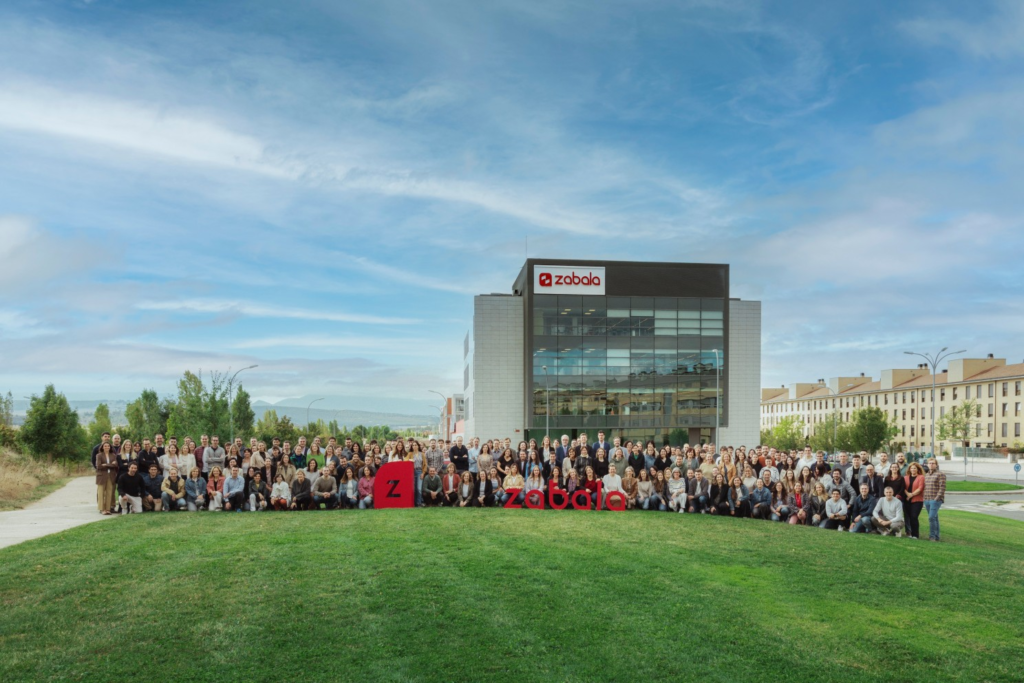
Headquartered in Pamplona, Spain, Zabala also has offices in Brussels (Belgium), Bordeaux and Paris (France), Lisbon (Portugal), and across Spain in Alcoy, Barcelona, Bilbao, Madrid, Seville, Valencia, Vigo and Zaragoza. These 13 locations are home to over 670 multidisciplinary professionals with expertise in areas such as agri-food, digital technologies, energy, the environment, health, industry, mobility, security and defence, and social challenges.
Zabala’s role in POLYMEER
Zabala produced the visual identity and communication materials for POLYMEER, including flyers, a roll-up, and templates. A central part of their work within the project involves coordinating the communication and dissemination strategy. Rather than only communicating when final results are available, activities are planned throughout the whole project lifecycle to enable different audiences to follow its progress and engage with its outcomes.
This includes managing digital communications. The website serves as the primary source of information regarding the project’s objectives, partners, and activities, while LinkedIn and X are leveraged to build a community, connect with European projects and initiatives, and engage with stakeholders beyond the consortium. Project videos and webinar recordings are uploaded to the YouTube channel. The newsletter complements these channels by periodically summarising the project’s main developments.
Media relations are also part of the strategy, with press releases and other materials designed to reach both specialised publications and broader audiences as important project milestones and results emerge.
Communicating scientific results to relevant audiences
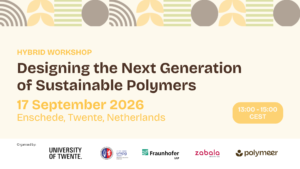
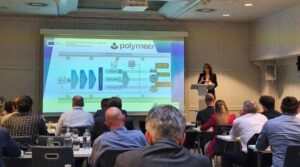
Communication and dissemination serve different, yet complementary, purposes. Dissemination focuses on making project knowledge available to researchers, industry, and other expert communities. POLYMEER partners participate in conferences, scientific publications, workshops, fairs, and other specialised events to share results and exchange knowledge with stakeholders working in the fields of bio-based materials, polymers, circularity and related subjects. The project also organises workshops dedicated to researchers and industry representatives, as well as a final event aimed at raising the profile of, and encouraging uptake, of the project’s results.
Conversely, communication makes POLYMEER and its relevance accessible to a wider range of stakeholders. Several target groups have been identified, including researchers, bio-based industries, end users in agriculture, brewing, packaging and automotive applications, public and non-profit organisations, policymakers, and citizens. Different channels and messages are therefore required depending on the target audience.
This audience-oriented approach is important because the transition towards bio-based materials involves more than just technical challenges. Lack of awareness and concerns around issues such as recyclability and the environmental credentials of bioplastics could act as barriers to adoption. Clear, accurate and targeted communication can help stakeholders to understand the intended use of the materials and their potential contribution to the circular bioeconomy.
Building connections beyond POLYMEER
Another important element is establishing connections between POLYMEER and the broader European research and innovation community. Zabala leads the project’s clustering activities with other EU-funded projects and has established the BIOPOLY Cluster, which includes three other CBE JU-funded projects: BIOPYRANIA, FURIOUS, and POLYMERS-5B. The cluster fosters the creation of synergies and knowledge exchange to maximise the impact of research and dissemination efforts, thereby enhancing project visibility. Activities include co-hosted webinars, shared conference sessions, joint communication campaigns, and regular coordination meetings.
Communication as a two-way process
POLYMEER’s approach goes beyond simply informing stakeholders about the project. It also involves listening to them. Zabala contributes to Lomartov’s work on the social acceptability of brewers’ spent grain-based polymers. Guided by the principles of responsible research and innovation, this task examines the concerns, expectations and needs of stakeholders through questionnaires, interviews, qualitative analysis, and a workshops to collect feedback and gain a better understanding of societal needs and concerns.
The outcome is directly connected to the project’s communication and dissemination activities. Stakeholder feedback can help shape not only the development of POLYMEER results, but also how their benefits, limitations, and potential applications are communicated.
Turning visibility into impact
POLYMEER aims to develop a new bio-based value chain that uses brewers’ spent grain are used to produce bioplastics for agricultural films, tertiary packaging and automotive textiles. To achieve this, scientific excellence, successful scale-up and credible sustainability performance are necessary. It also requires knowledge to travel beyond the laboratories and organisations producing it.
By communicating, disseminating and engaging with stakeholders, as well as collaborating with other European initiatives, Zabala helps create to connections that allow research to reach the communities that can build on it and turn it into long-term impact.