POLYMEER started from an idea by Assunta Marrocchi and Ombretta Marconi at the University of Perugia, aiming to transform brewer’s spent grain (BSG) – the brewing industry’s largest by-product, accounting for ≈85% of brewing residues – into innovative, sustainable bio-based polymers for applications in agriculture, automotive textiles, and tertiary packaging.
UNIPG driving research and coordination within POLYMEER
The University of Perugia (UNIPG) is a leading Italian institution founded in 1308. It has over 27,000 students and offers a wide range of programs through 14 departments, 97 undergraduate and graduate courses, and 24 PhD programs. In addition, the University hosts numerous specialized research centres and study institutes. Its nearly 1,000 faculty members ensure high-quality teaching and research, reflecting a rich academic tradition while driving cutting-edge scientific innovation. Through its applied research and teaching activities, the University is strongly committed to contributing to sustainable development and the transition to a greener, more circular economy.
UNIPG coordinates the POLYMEER project and leads Work Package 1 (WP1), which focuses on the fractionation of brewer’s spent grain (BSG), the conversion of its components into bio-based chemical building blocks, and the synthesis of (co) polymers from these building blocks. The UNIPG team, composed of Assunta Marrocchi (Associate Professor, Department of Chemistry, Biology and Biotechnology), Ombretta Marconi (Associate Professor, Department of Agriculture, Food and Environmental Science & Director of the Italian Brewing Research Centre CERB), and Daniela Lanari (Associate Professor, Department of Pharmaceutical Science), together with PhDs and postdoctoral researchers, brings complementary expertise in organic chemistry, green chemistry, food technology, and materials characterization. In addition, UNIPG actively supports other WPs by contributing to formulation and scaling-up, participating in sustainability assessments, dissemination activities, and exploitation.
Transforming BSG into bio-based materials
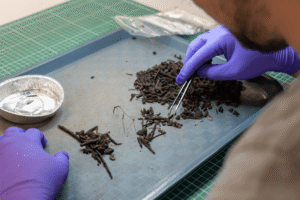
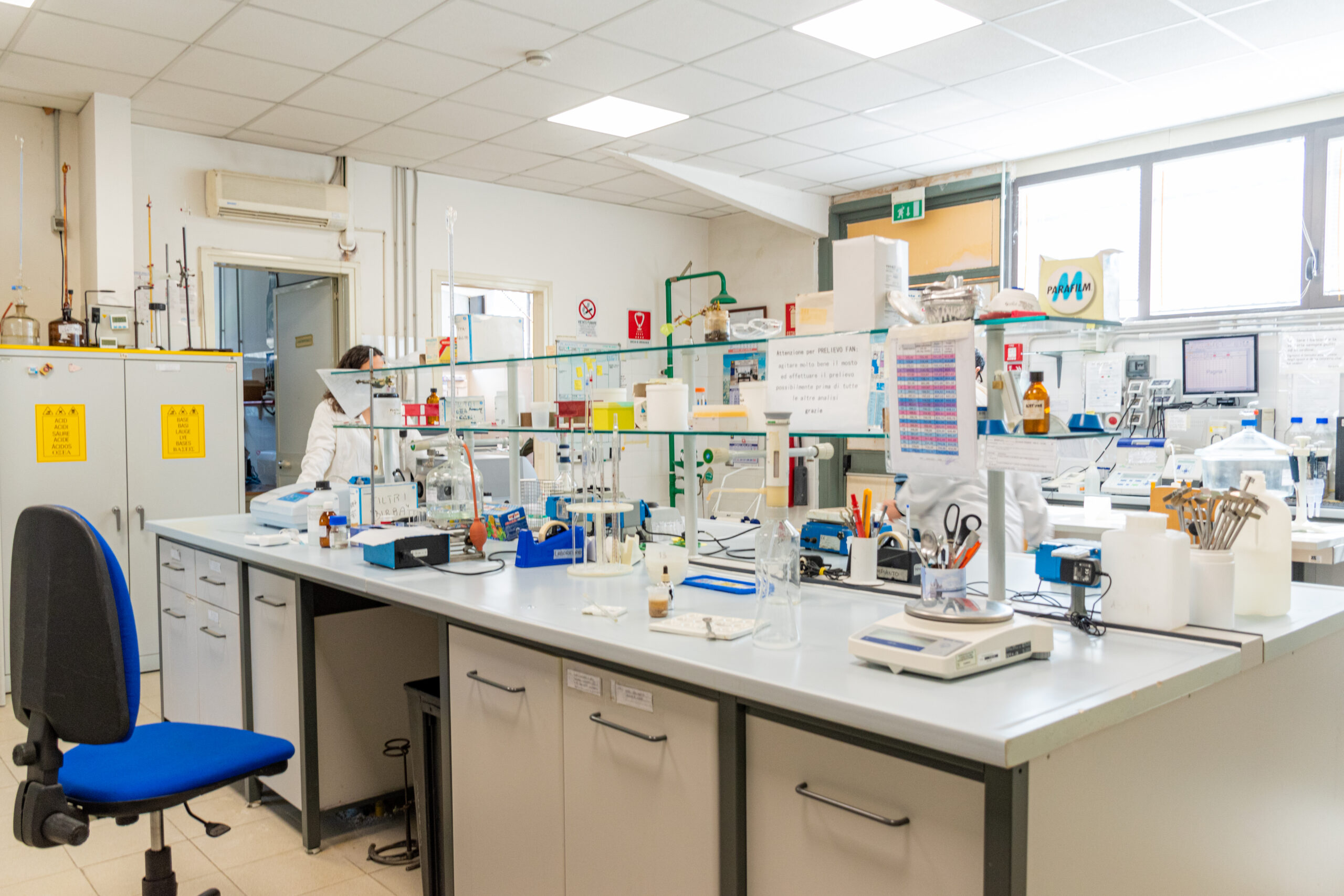
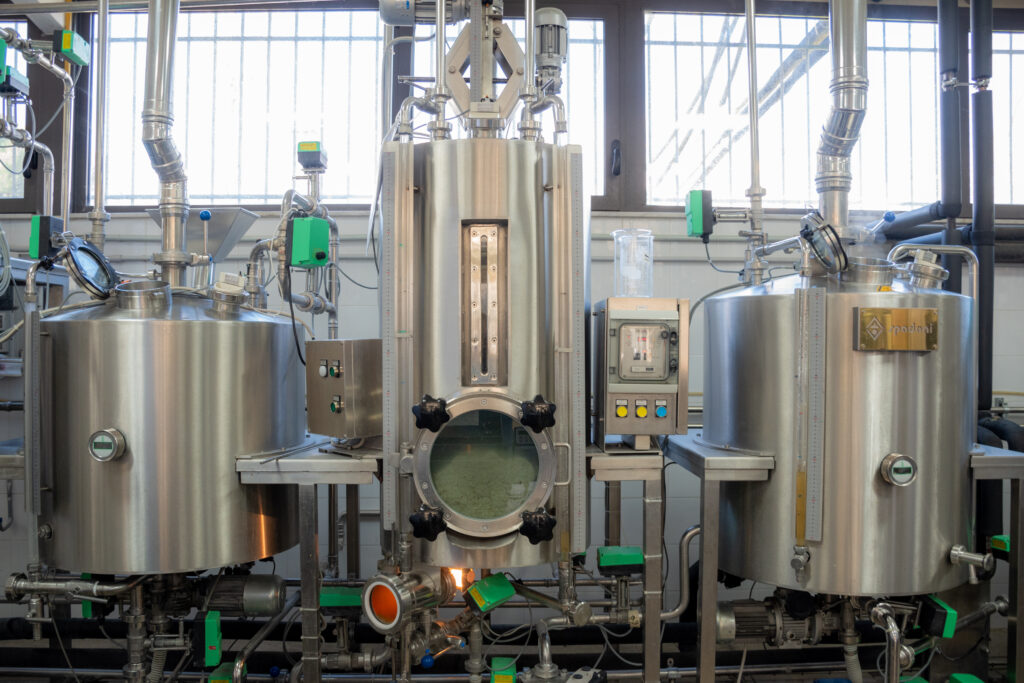
At UNIPG laboratories, researchers work on two interconnected levels. On one level, they focus on the valorisation of wet BSG at experimental level, extracting key biopolymers like polysaccharides and lignin using processes designed to minimize chemical consumption, energy use, and overall waste generation. Techniques include mild thermal treatments, aqueous extraction, and selective fractionation, which preserve the molecular integrity of the biopolymers and enable their efficient recovery.
On the second level, these extracted fractions are converted through reliable, green, and scalable processes into highly specific bio-based building blocks, the essential “bricks” for the synthesis of innovative polymers, co-polymers, and polymer blends. Special attention is given to the selection of green solvents and the avoidance of harmful or unsafe reagents, ensuring that the processes minimize waste. The resulting building blocks are then provided to project partners, who use them to develop polymers with tailored properties for three demanding applications: agriculture, automotive textiles, and tertiary packaging. State-of-the-art equipment and analytical methods are employed to monitor the composition, structure, and properties of both the biopolymers extracted from BSG and the bio-based building blocks. These include Fourier Transform Infrared Spectroscopy with Attenuated Total Reflectance (FTIR-ATR) spectrophotometer, Gas Chromatography (GC/GC-MS), Nuclear Magnetic Resonance (NMR) spectrometer, Hydrogenation Reactors, CHNS/O Elemental Analyzer.
Towards a circular and sustainable future
These activities, together with the broader efforts of the POLYMEER project, contribute to the development of sustainable bioplastics, which represent a key opportunity to significantly decarbonize the plastics sector by reducing reliance on conventional plastics, promote a circular economy, and contribute to the ambitious target of the European Green Deal. However, several challenges remain, including a fragmented though supportive EU regulatory framework, substantial investment requirements to scale up production and R&D, and critical shortcomings in the necessary waste management infrastructure (especially industrial composting) to process these materials effectively. Furthermore, consumer confusion over labelling and disposal methods risks contaminating traditional recycling streams and undermining the materials’ environmental benefits.
Academic institutions like UNIPG play a crucial role in addressing these challenges through both fundamental and applied research. By transforming brewer’s spent grain into bio-based building blocks for the development of innovative polymers, UNIPG supports the wider adoption of bioplastics and promotes innovation in the EU’s circular economy.