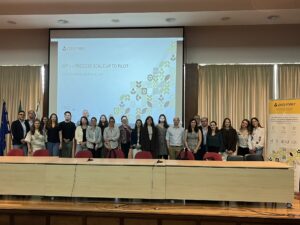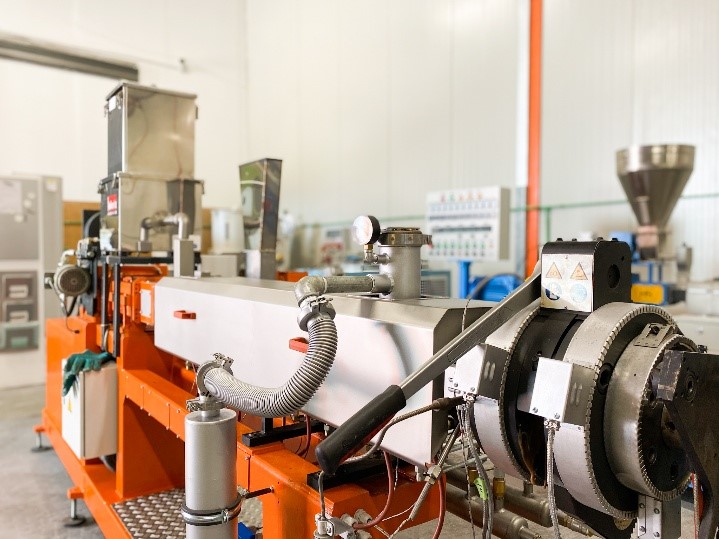
BIO-MI Ltd. is a Croatian SME with strong expertise in research, development, and industrial processing of sustainable, bio-based polymer materials. The company focuses on the development of biodegradable, compostable, and recyclable thermoplastic materials through advanced R&D activities, including material design, formulation, and performance optimisation, while ensuring compatibility with existing industrial processing technologies. BIO-MI’s in-house infrastructure enables transition from laboratory-scale development to pilot and industrial-scale production covering a wide range of processing technologies, such as twin screw extrusion, cast and blow extrusion, co-extrusion, welding, printing, coating, and injection molding, all supported by comprehensive laboratory analyses. Since 2017, BIO-MI has been a full member of the Bio-based Industries Consortium (BIC).
In Polymeer, BIO-MI is leading WP3 – Process scale up to pilot where the processes developed in previous work packages, including BSG fractionation, monomer and polymer synthesis and the production of final formulations and products, will be scaled up. Within the WP3, BIO-MI is concentrated on the scale up of the compounds and formulations, which BIO-MI will then use to produce agricultural films and tertiary packaging applications. BIO-MI is also present in WP2, where it leads lab scale agricultural and tertiary applications and testing.
Agricultural films and tertiary packaging – from lab to pilot scale
The production of biodegradable agricultural films and tertiary packaging plays a crucial role in addressing the environmental challenges associated with conventional plastic use in agriculture and logistics. Within Polymeer project, activities focus on transforming innovative materials into scalable, application-ready solutions.
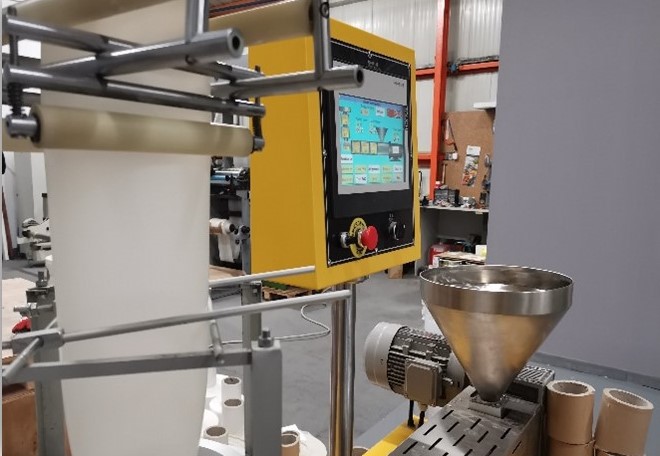
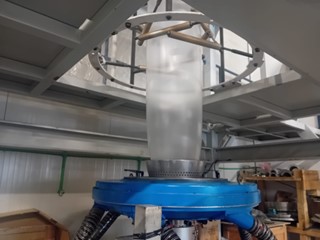
Development begins at laboratory scale, where biodegradable polymer blends are carefully designed and optimised to achieve the required mechanical performance, flexibility and durability. These low TRL tests ensure that materials meet application-specific requirements before scaling up. The scale-up then goes to pilot scale, representing the final validation step within the project. Pilot scale twin screw extrusion and film blowing are necessary for the demonstration of the feasibility of producing continuous biodegradable films under conditions that closely resemble industrial manufacturing. This phase allows evaluation of process stability, reproducibility and material performance at increased throughput.
Biodegradable mulch films are developed to reduce plastic residues in soil and prevent microplastic accumulation, while maintaining sufficient durability during crop cultivation and reducing post-harvest labour associated with mulch removal and disposal. In parallel, biodegradable tertiary packaging films are designed to provide mechanical strength and load stability for transport and handling, while supporting sustainability and circular economy objectives.
By successfully scaling up biodegradable film production to pilot level, the project reduces technical risk, demonstrates practical applicability, and provides a solid foundation for future industrial adoption of sustainable film solutions.
Challenges and opportunities of bioplastics in the EU and EU projects
Bioplastics are playing an increasingly important role in the European Union’s transition towards a circular, sustainable, and climate-neutral economy. As materials that are bio-based, biodegradable, or both, bioplastics offer promising alternatives to conventional fossil-based plastics, particularly in sectors such as packaging, agriculture, textiles, automotive, and healthcare.
Despite their potential, bioplastics still face several challenges that need to be addressed to enable wider market uptake and to increase their market competitiveness against fossil-based plastics. One of the key barriers is the higher cost of production compared to traditional plastics, largely due to feedstock prices, limited economies of scale, and relatively new production technologies. In addition, material performance may not yet meet all application requirements. Another important challenge is the lack of harmonised standards and clear labelling, which can lead to confusion among consumers and waste operators regarding bio-based content, biodegradability, and appropriate end-of-life options. Furthermore, waste management and recycling infrastructure for bioplastics is still unevenly developed across the EU, limiting their effective integration into existing circular systems.
At the same time, the opportunities offered by bioplastics are significant. They can reduce dependence on fossil resources, lower greenhouse gas emissions, and support the use of renewable and waste-based feedstocks. Bioplastics also drive innovation across the bio-based value chain, from raw materials to product design and end-of-life solutions, while contributing to regional development and green job creation. EU-funded initiatives, including projects supported by CBE JU, play a crucial role in bridging the gap between research and market deployment by fostering collaboration between industry, academia, and public stakeholders.
In this context, the Polymeer project contributes directly to addressing existing challenges and unlocking new opportunities for bioplastics in Europe. By advancing innovative bio-based materials and circular solutions, Polymeer supports the EU’s ambition to build a resilient, competitive, and sustainable bioeconomy. With continued investment, clear policy frameworks, and increased awareness among consumers and industry, bioplastics can become a key pillar of Europe’s transition to a truly circular plastics economy.